


If Your Team Is Stuck, Leadership Is the First Place to Look | Cultural Alignment Solutions
Here’s the truth: when a team is stuck, most leaders look in the wrong direction.
They look at motivation. They look at attitude. They look at engagement, buy-in, or whether the team just “wants it enough.” But this is where most leaders get it wrong. The problem usually is not the team. The problem is the leadership pattern driving the team’s behavior.
Teams do not get stuck on their own. They are led there through unclear expectations, inconsistent accountability, weak follow-up, and tolerance for behaviors that should have been addressed earlier. That is not blame. That is ownership. And ownership is where change starts.
If you want to scale performance, improve execution, and build a culture that actually moves, you have to stop asking why your team will not step up and start asking how your leadership is shaping what they keep repeating.
What “Stuck” Actually Looks Like
A stuck team does not always look dysfunctional. In fact, it often looks deceptively normal.
It looks like people are doing just enough to get by. It looks like conversations that happen but never land. It looks like leaders repeating the same expectations with no visible change. It looks like constant motion without meaningful progress. Work is happening, but traction is not. Activity is high, but ownership is low.

This is where things break down. Leaders see the symptoms and assume the issue lives in the team. They tell themselves the team is disengaged, resistant, or lacking initiative. But behavior on a team does not happen in isolation. Teams respond to the environment leadership creates.
The problem is not your team. Your team is responding to the level of clarity they receive, the standards that are reinforced, and the consistency of follow-up they experience. When those things are weak, teams drift. When those things are strong, teams move.
Your Team Is a Leadership Mirror
This is the shift most leaders avoid because it forces a harder conversation.
Your team is not broken. Your team is reflecting leadership back to you.
They are responding to your clarity or lack of it. They are responding to your consistency or inconsistency. They are responding to what you allow, what you ignore, and what you keep repeating without consequence. That reflection can be hard to face, but it is also what gives you power. Because once you see the pattern, you can change the pattern.
Too many leaders treat stalled performance like a motivation issue when it is really a leadership design issue. They assume people should already know what is expected. They avoid hard conversations because they do not want to create tension. They mistake being busy for leading well. Then they wonder why accountability is weak.
Here’s the truth: teams rarely outperform the leadership environment around them. If the environment is vague, reactive, and inconsistent, the team will be too.
Why Most Leaders Stay Stuck Too
Most leaders do not break a stuck team by pushing harder. They stay stuck by doing more of what is already not working.
They repeat instructions instead of clarifying standards. They apply pressure instead of building accountability. They have one difficult conversation and call it follow-up. They assume that saying it once should be enough. It is not.
This is where most leaders get it wrong. They think leadership means communicating expectations. Real leadership means ensuring expectations turn into behavior. That requires reinforcement. That requires structure. That requires follow-through.
Without that, teams learn a dangerous lesson: nothing really changes here. Standards become suggestions. Conversations lose credibility. Trust erodes because people stop believing leadership means what it says.
A stuck team is often the result of a leader who is hoping for change instead of leading it. Hope is not a strategy. Action is.
The Shift That Changes Everything
The leaders who break the stuck pattern do not become louder. They become clearer.
They stop assuming. They define expectations directly. They make ownership visible. They create accountability that feels like partnership, not punishment. And they follow up in a way that proves leadership is not a speech. It is a system.

One leader we worked with described her frustration this way: she felt like she was dragging her team behind her. At first, she thought the issue was that her people would not step up. But the real breakthrough came when the question changed.
Instead of asking, “Why won’t they step up?” she asked, “Where am I not leading them to step up?”
That question changed everything.
Because this is not about pushing people harder. It is about leading differently. When leaders take ownership of the environment they have created, they stop managing symptoms and start changing behavior at the source.
The AAF Framework: Action, Accountability, Follow-Up
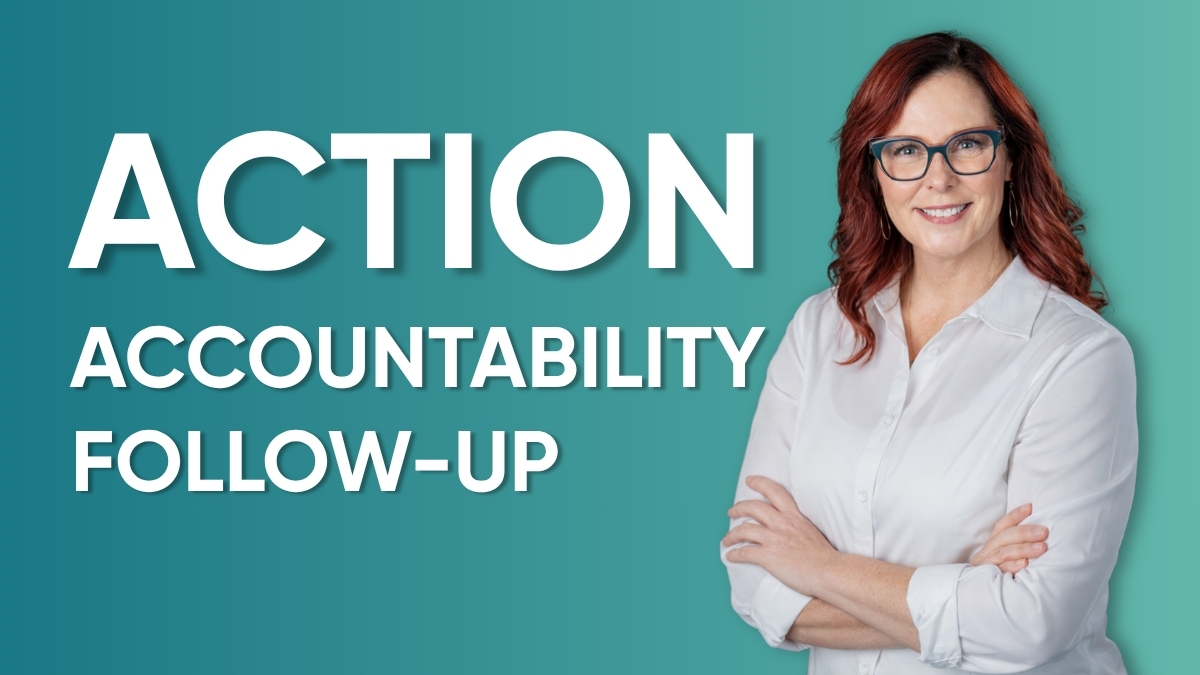
This is exactly where the AAF framework matters.
Action
Leaders must take intentional action instead of waiting for the team to somehow self-correct. That means being explicit about expectations, addressing issues when they show up, and refusing to lead passively. If you want a stronger culture, stronger execution, or stronger ownership, you have to lead it on purpose.
Accountability
Accountability is not pressure. It is ownership with standards. Strong leaders do not just assign work. They create clarity around what success looks like, who owns what, and what happens when commitments are missed. Accountability removes confusion and replaces it with responsibility.
Follow-Up
This is where trust is built or broken. Follow-up tells the team whether leadership actually means what it says. Without follow-up, even good conversations lose value. With consistent follow-up, expectations become culture. This is where reactive management ends and intentional leadership begins.
When leaders apply Action, Accountability, and Follow-Up consistently, teams stop hiding behind excuses. Ownership becomes visible. Conversations get sharper. Performance starts to move.
What Happens When Leadership Changes
In that same client situation, the team did not change because a new team was hired. The team changed because leadership changed first.
The leader stopped relying on “I already told them” as proof of leadership. She stopped assuming ownership would appear on its own. She stopped treating follow-up like an optional extra.
Instead, she built a leadership rhythm around clarity, accountability, and reinforcement. Within weeks, conversations became more honest. Ownership became easier to see. Execution improved because expectations were no longer left open to interpretation.
Same team. Different leadership.
That is the point many leaders miss. You do not fix culture by talking about culture. You change how leaders lead, and culture naturally aligns.
The Real Question to Ask Yourself
Before you rush to fix your team, stop and look at what they may be reflecting back to you.
Where have you been unclear?
Where have you tolerated what should have been addressed?
Where has your follow-up been inconsistent?
Where have you expected ownership without building the structure to support it?
No spin. No justification. Just truth.
Because what you are willing to see is what you are finally able to change. And the moment you stop treating your team like the problem and start treating leadership like the lever, you get your power back.
If your team is stuck, look at leadership first.
The problem is not always capability. It is often clarity. It is often accountability. It is often follow-up. Teams do not get stuck by accident. They are led there through patterns that feel normal until someone has the courage to challenge them.
Here’s the truth: you do not fix culture by demanding more from the team. You fix the leadership behaviors shaping the team’s reality.
That is where momentum starts. That is where alignment begins. That is where results change.
If this is showing up in your team, it is time to address it.
At Cultural Alignment Solutions, this is exactly the work we do. We help leaders move from reactive management to intentional leadership by building cultures rooted in Action, Accountability, and Follow-Up.
If your team is stuck, your next move is not more pressure. It is better leadership. Book a strategy call and let’s fix what is actually driving the problem.